Reverse Osmosis Explained: How the Technology Works, and Why Your Family Might Need It
RO systems remove almost everything from your water — including things you actually want. Here's an honest, non-hyped explanation of how they work and when they're worth installing.
Ask ten water treatment salespeople whether you need a reverse osmosis system and you'll get ten variations of 'absolutely, yes, this week.' We've been in this business in Sioux Falls since 1948, and here's a more honest answer: probably yes, but only if you understand what it does, what it doesn't do, and how to pick a good one. This article is that guide.
The science, briefly
'Osmosis' is the natural tendency of water to move from a less-concentrated solution to a more-concentrated one through a semi-permeable membrane, evening out the concentrations. It's how plant roots pull water from soil. Reverse osmosis is exactly what it sounds like: applying pressure to force water in the opposite direction — from a more-concentrated solution (your tap water, full of dissolved solids) through a membrane, leaving those solids behind and delivering nearly pure water on the other side.
The membrane itself is a thin-film composite polymer with pores measured in angstroms — about 0.0001 microns. For scale: a human hair is roughly 70 microns thick. A virus is 0.02 to 0.4 microns. An RO membrane is small enough to block dissolved salts, heavy metals, PFAS, pharmaceuticals, and most microbial contaminants, while letting individual water molecules through. That's why it's the most thorough drinking-water treatment available at the household level.
What a home RO system actually looks like
A typical under-sink RO system has four or five stages, plumbed in series:
- Pre-sediment filter: removes rust, silt, and dirt that would clog the membrane.
- Pre-carbon filter: removes chlorine, which would otherwise oxidize and destroy the membrane in months.
- RO membrane: the workhorse, where the actual purification happens.
- Storage tank: because the membrane makes water slowly (a few ounces per minute), the system stores 2 to 4 gallons to give you fast flow at the faucet.
- Post-carbon polish filter: removes any residual taste or odor before delivery.
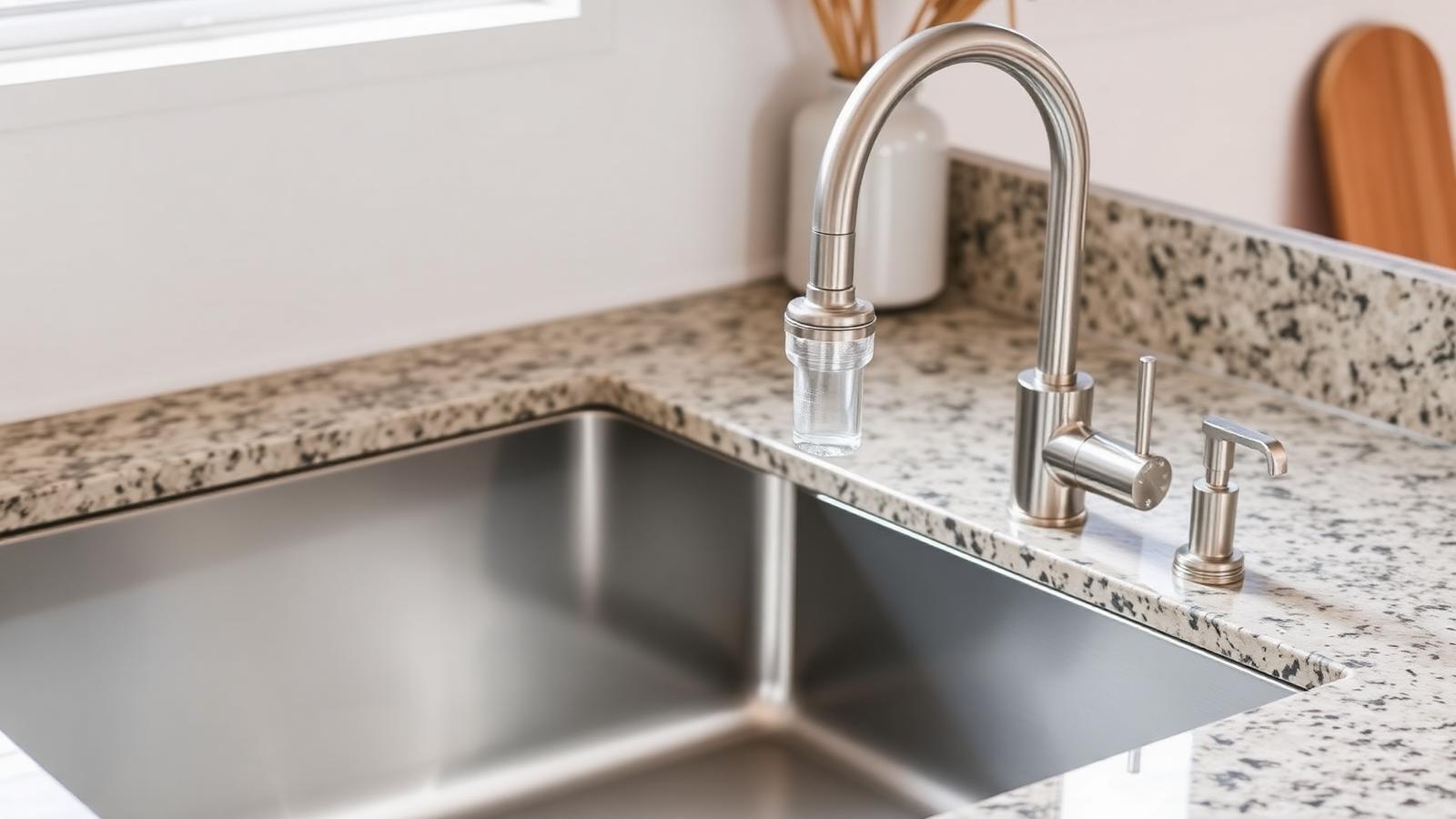
The whole assembly fits under a standard kitchen sink and connects to a small dedicated faucet installed next to your main faucet. You keep your regular tap for washing dishes and filling the pot for pasta water; you use the RO faucet for drinking, coffee, ice, and cooking anything where water is the ingredient.
What it removes
A well-designed RO system with NSF 58 certification removes 94% to 99% of most dissolved contaminants. In practical terms, that means:
- Lead, arsenic, mercury, cadmium, chromium: 95%+ removal. Relevant for older Sioux Falls homes with legacy copper or lead solder joints.
- Nitrates and nitrites: 85%+ removal. Important for private wells near agricultural land.
- PFAS 'forever chemicals': 94% to 99% removal for both long- and short-chain compounds.
- Fluoride: 90%+ removal, if that's something you're trying to avoid.
- Chlorine and chloramine byproducts: near-total removal (though the pre-carbon does most of this).
- Pharmaceuticals and pesticides: 80% to 99% removal depending on the compound.
- Dissolved salts and minerals: this is the trade-off — see below.
What it also removes (and whether that matters)
The most common criticism of RO water is that it strips out beneficial minerals along with the bad stuff. That's true — magnesium, calcium, and potassium are all significantly reduced. Whether that's a problem depends on who you ask.
The World Health Organization has flagged demineralized water as suboptimal for long-term drinking. In practice, most Americans get well over 95% of their mineral intake from food, not water, so the effect on nutrition is minor. If it concerns you, most modern RO systems can add a remineralization cartridge that puts a small amount of calcium and magnesium back into the water for taste and mineral profile. It's a $40 upgrade and worth it for households that prefer the mouthfeel.
The water-waste question
This one gets exaggerated. Older RO systems had recovery ratios around 1:4 — one gallon of product water for every four gallons sent to drain. That was a legitimate concern in drought-prone regions. Modern residential systems, and especially permeate-pump or tankless RO designs, achieve recovery ratios of 1:1 or even better.
For a family drinking two to three gallons of RO water per day, even a mid-range system sends about 5 to 10 gallons per day to drain. In Sioux Falls, where water rates are among the lowest in the country and supply is abundant, that adds up to less than $2 per month. It's a rounding error on your water bill.
How to pick a good one
There are hundreds of RO systems on Amazon for $150 to $300. Some of them are fine. Many of them are not. The specific things to look for:
- NSF/ANSI 58 certification: verifies actual contaminant removal claims. Without it, marketing copy is just marketing copy.
- NSF/ANSI 372 lead-free certification: for the faucet and fittings, especially important if pregnant women or young children will drink from it.
- Quick-connect fittings: easier maintenance, fewer leaks. Old-school compression fittings work but are less forgiving.
- Standard-size filter cartridges: proprietary cartridges lock you into one supplier and drive up replacement costs.
- Local service: an RO system needs pre-filters swapped annually and a new membrane every 3 to 5 years. Having someone in town who can service what they sold matters.
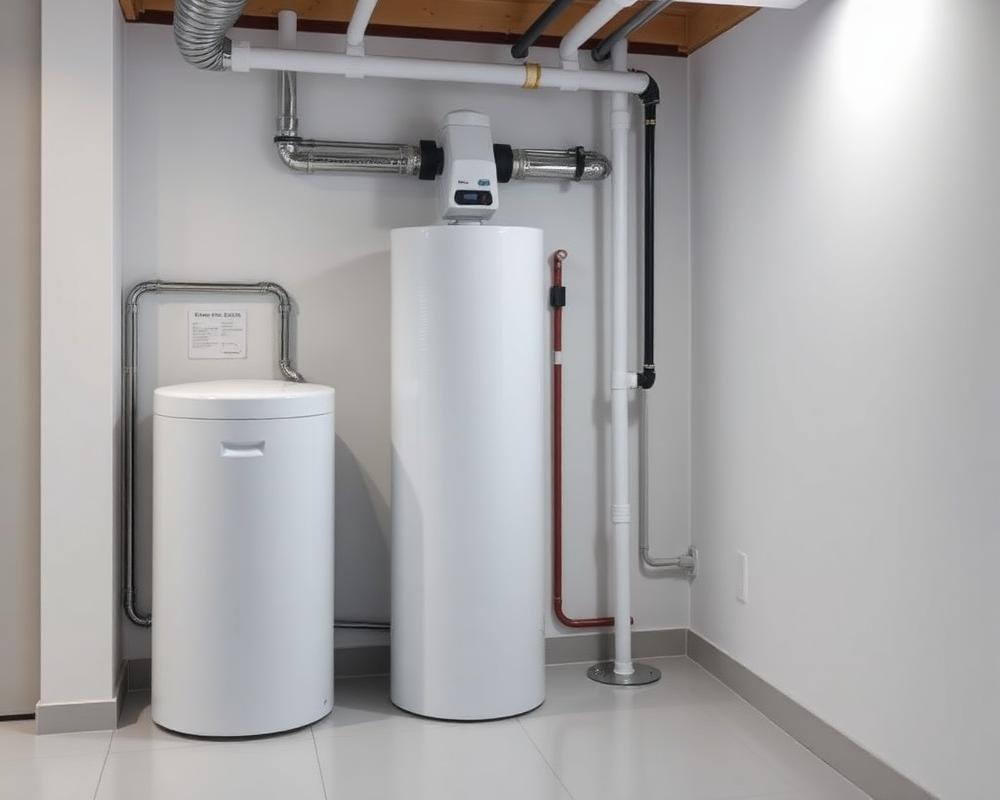
The EcoWater ERO-375 series we install most commonly checks all these boxes and is designed for hard-water regions specifically — the pre-filters and membrane are sized for water with high TDS like ours.
Softener plus RO: the standard Sioux Falls setup
For most homes here, the right combination is a whole-house softener paired with an under-sink RO at the kitchen. The softener protects appliances, fixtures, and skin. The RO gives you drinking-quality water without minerals and any trace contaminants. They complement each other: the softener actually extends RO membrane life by removing the hardness that would otherwise scale up the membrane surface.
Installed together, the pair typically runs $2,800 to $4,500 depending on softener size and RO model. That's the reference-class solution for a Sioux Falls family that wants their water problem permanently and comprehensively solved.
The bottom line
Reverse osmosis is the most thorough drinking-water treatment technology available for residential use. It's proven, mature, and cost-effective. For families in Sioux Falls dealing with hard water, aging plumbing, PFAS concerns, or a private well of unknown quality, it's genuinely one of the best investments in daily quality of life you can make. Pick a certified system, pair it with a softener, and service it on schedule — and you'll be pulling truly clean water out of that little chrome faucet for the next 15 years.
Get your water tested — free
We'll come to you, measure your water, and recommend the right fix. No pressure.
Book a Free Water Test