Commercial Water Treatment: A Small Business Owner's Guide to Better Water
From coffee shops to laundromats to dental clinics, water quality is quietly one of the biggest hidden costs a Sioux Falls small business faces. Here's how to think about it.
If you run a small business in Sioux Falls that uses water — and almost every business uses water for something — you've probably had at least one 'why does this equipment keep failing?' moment. A boiler that goes down every 18 months. A dishwasher that leaves spots no matter which detergent you buy. Ice machines that die well before their warranty runs out. Coffee that tastes flat despite premium beans. In almost every case, water is the culprit and treatment is the solution — but the specifics matter a lot depending on what you do.
Here's an honest guide to commercial water treatment for the industries we serve most often in this market.
Why commercial water treatment is different from residential
Homes are forgiving. A family uses maybe 300 gallons a day, water sits in pipes overnight, and even a marginal appliance can limp along for years. Businesses are the opposite: continuous flow, high peak demand, expensive equipment, and downtime that directly costs money. A restaurant kitchen with a scaled-up dishwasher isn't just annoyed — it's losing tables. A dental office with hard water spots on instruments is failing inspections.
The other difference is that commercial equipment manufacturers assume treated water in their warranties. Read the fine print on a commercial espresso machine, a boiler, a steam oven, or an ice maker, and you'll find explicit hardness and TDS limits — usually 3 to 5 grains per gallon, sometimes lower. Sioux Falls tap water is 4 to 5 times that. Skip the treatment and you're voiding warranty coverage on a $15,000 machine.
Coffee shops and cafés
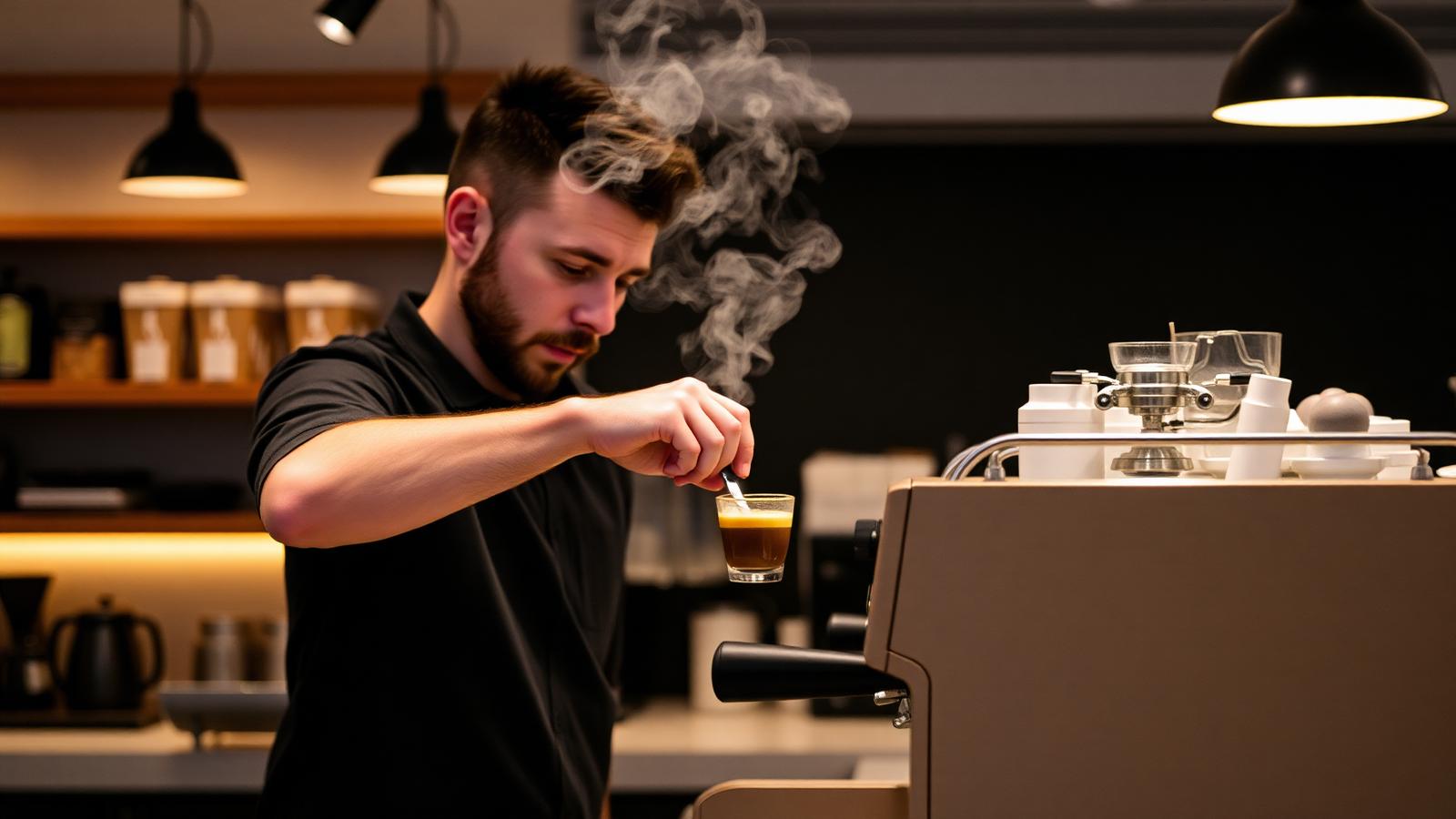
Coffee is 98% water. The mineral content of that water is not a background detail — it's a primary flavor input. The Specialty Coffee Association publishes explicit water standards: 150 mg/L TDS is the target, with hardness between 50 and 175 mg/L (roughly 3 to 10 gpg). Higher hardness scales the espresso machine boiler and mutes flavor. Lower hardness underextracts and makes coffee taste flat and sour.
The right setup for a Sioux Falls café is usually a small softener followed by a blending valve and a carbon polish filter, then dedicated RO for the espresso machine. Total installed cost is typically $2,500 to $5,000 depending on the equipment being fed. Payback comes from three places: extended equipment life, better-tasting coffee (which retains customers), and eliminated service calls for scale-related failures.
Restaurants and food service
Restaurants have three separate water needs: prep and cooking, dishwashing, and ice. Each has different quality requirements.
- Dishwashing: needs softened water. Every restaurant dishwasher manufacturer specifies it. Hard water leaves spots on glassware, extends cycle times, and destroys rinse arms. Standard whole-facility softener sized to peak demand.
- Ice machines: benefit from softened + filtered water. Ice made from hard water is cloudy and melts fast. Manufacturers void warranties on units run on untreated water. A small dedicated softener + carbon block filter runs about $1,200 installed.
- Prep and drinking: RO for anything served as beverage. A single under-counter RO system serves multiple soda dispensers, coffee brewers, and drinking taps.
Laundromats and commercial laundry
This is the industry where hard water costs the most. Every gallon of hot water going into a washer that's been mineral-loaded requires more detergent, extra rinses, and longer cycles. Commercial laundries that install softening systems typically report 30% to 50% reductions in chemical usage and noticeably improved fabric brightness and lifespan.
For a Sioux Falls laundromat with 20-plus machines, we typically design a twin-alternating high-capacity softener system that provides softened water continuously without regeneration downtime. The system pays back in chemical savings alone within 18 to 30 months.
Dental and medical offices
Dental autoclaves, ultrasonic cleaners, and sterilization equipment are the most water-quality-sensitive items in most professional buildings. Most require distilled or Type II reagent-grade water — hardness under 1 gpg, TDS under 5 mg/L. The wrong water damages instruments, leaves residue on sterilization pouches, and can trigger inspection findings.
The standard solution is a small commercial RO unit dedicated to the sterilization suite, sometimes with a mixed-bed deionization polish for the highest-purity applications. Installations are usually straightforward — under $3,000 for a well-designed system that eliminates the ongoing cost of buying distilled water in jugs.
Boilers, cooling towers, and mechanical systems
Any commercial facility with a boiler or cooling tower has a mechanical room that quietly costs a lot of money to run. Untreated hard water in a boiler forms scale on heat exchange surfaces — every 1/16 inch of scale reduces heat transfer efficiency by 12% or more. Scaled boilers use significantly more fuel to deliver the same heat and fail years earlier.
Softening is the baseline. For steam boilers and larger systems, we typically add a chemical treatment program that addresses oxygen scavenging, pH control, and corrosion inhibition. It's not glamorous work, but it's the difference between a boiler that lasts 25 years and one that gets replaced in 12.
Car washes
Every commercial car wash needs some form of water treatment, and increasingly customers expect a spot-free rinse — which requires RO or deionized water for the final pass. Water reclaim systems have also become standard as utility costs rise and environmental regulations tighten. A well-designed reclaim + RO combination can cut fresh water usage by 60% or more while producing better-quality wash results.
How to evaluate your business
A few practical questions to ask yourself:
- How often does water-touching equipment fail unexpectedly?
- What does your equipment manufacturer specify for water hardness and TDS?
- How much are you spending per month on detergents, rinse agents, and cleaning chemicals?
- Have you had customer complaints about spots, taste, or ice quality?
- Are you running any equipment out of warranty because of unspecified water?
If more than two of those hit close to home, a commercial water assessment is worth the hour it takes.
How we approach commercial jobs
For commercial work we start with an on-site assessment: measure incoming water quality, review your equipment specs and warranties, understand your peak flow and daily volume, and price out a system that hits your requirements without overselling capacity. Commercial systems get sized properly the first time or they fail early — there's no in-between. Our commercial installations come with maintenance contracts if you want them, so the system stays performing to spec without you needing to manage it.
If you're running a Sioux Falls business and haven't looked closely at your water in a while, the assessment is a good investment of time. Sometimes we recommend a system. Sometimes we tell you what you have is fine. Either way you leave with an accurate picture of what's happening at your water main.
Get your water tested — free
We'll come to you, measure your water, and recommend the right fix. No pressure.
Book a Free Water Test